(As a good Canadian girl, naturally I’m going to use a hockey reference here 🙂 )
In the quest to understand how different medications for any medical condition work, it’s helpful to compare them directly, head-to-head, in a clinical trial. In the obesity field, we have very little data in terms of direct comparisons, so we end up inevitably comparing one trial’s results to another, which is fraught with all kinds of limitations (different group of people in the trial, different lifestyle counseling, different protocols, different study durations and locations, etc.)
The SURMOUNT5 trial brings us a direct comparison of the two highly effective weight management medications currently available – tirzepatide (called Mounjaro or Zepbound for weight management, depending on what country you live in), and semaglutide 2.4mg (Wegovy). The study was a 72 week study comparing the maximum tolerated dose of tirzepatide (10mg or 15mg weekly) to the maximum tolerated dose of semaglutide (1.7mg or 2.4mg weekly) in 751 adults in USA or Puerto Rico with obesity or overweight, without diabetes.
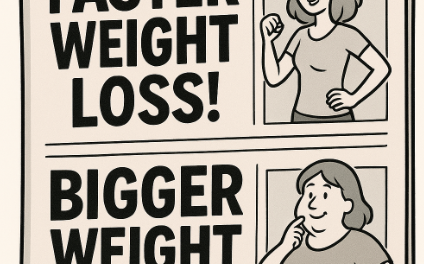
While the full results of the study are not yet available, the high level press release announced that weight loss with tirzepatide was -20.2%, vs -13.7% with semaglutide. This is making headlines all over the world, with catch phrases like ‘Zepbound outperforms’ or ‘Mounjaro declared a winner’.
But do these results really mean that Mounjaro/Zepbound is BETTER than Wegovy? Well, the answer to this question will be different, depending on who you’re talking to. And I don’t mean which doctors or researchers you’re talking to – I mean, which person living with obesity you’re talking to. Each of these medications has shown specific benefits to health, some of which overlap, and some of which are unique to that medication (based on current data). For example, both improve quality of life for most people, and help most people to feel better. Both have shown benefit in heart failure with preserved ejection fraction (with arguably the most compelling data in tirzepatide’s SUMMIT trial to reduce hospitalizaitons for heart failure). Both have data suggesting regression of fibrosis (improvement in scarring) in fatty liver disease. Both have shown regression of prediabetes to normal sugars (numerically greater with tirzepatide, though that’s comparing numbers from different trials). Semaglutide has been shown to reduce heart attack and stroke risk by 20% (Mounjaro/Zepbound’s study is not yet complete on that question). Tirzepatide powerfully reduces sleep apnea.
If the numbers on the scale are the most important goal to the person taking treatment, then yes, tirzepatide is better based on this study. Remember though, many people do not need maximum doses of these medications to achieve their weight goals. I have many patients on both medications who have reached their health targets – and their personal weight targets – with far less than maximum dose of medication.
BOTTOM LINE: The targets in taking weight management medication for most people should be improvement in health and quality of life. For people who consider the numbers on the scale to be an important target in their weight management journey, they may be able to reach their target with either semaglutide or tirzepatide. Weight loss is greater with Mounjaro/Zepbound when compared directly to Wegovy.
Disclaimer: I am/have been an investigator in clinical trials of tirzepatide and semaglutide. I receive honoraria as a continuing medical education speaker and consultant from the makers of tirzepatide (Eli Lilly) and semaglutide (Novo Nordisk).
Share this blog post using your favorite social media link below!
Check me out on twitter! @drsuepedersen
www.drsue.ca © 2024