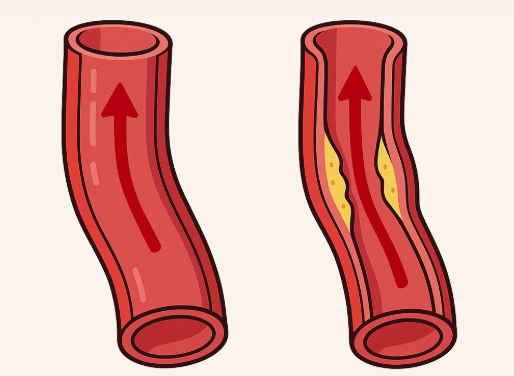
In our quest to look for and treat cardiovascular disease, healthcare professionals typically focus on two things: heart disease (heart attack risk) and stroke risk. Lurking in the background is often an undiagnosed relative to these two, and that is peripheral artery disease (PAD) – narrowing of the arteries to the extremities. PAD causes pain in leg muscles with activity/exercise (called intermittent claudication in medicalese), leading to a gradual decrease in walking ability and activity, functional decline and sometimes disability. PAD can also cause pain in the foot or toes at rest, and the decreased blood flow to the extremities can also result in wounds that don’t heal and foot ulcers. PAD often goes undiagnosed, with symptoms being misattributed to ‘aging’, being ‘out of shape’, or diabetic nerve pain. In more severe cases, PAD may require revascularization (opening up the arteries), or amputation.
PAD can be diagnosed with a simple bedside test called the ankle-brachial index (ABI), which is a ratio of the systolic blood pressure at the ankle to the arm. The pressure is normally higher in the ankle than the arm (ABI 1-1.3). An ABI ≤0.9 is abnormal and 0.9-0.99 is considered borderline normal. Ultrasound is often used to identify the location and severity of artery narrowing.
There is a lot that we need to do for people with PAD. Vascular risk protection strategies that we know reduce risks of heart attack and stroke also have benefits to people with PAD – like smoking cessation, statins to lower cholesterol, good blood pressure control, good blood sugar control in people with diabetes, and antithrombotic (anti blood clotting) medication. There is strong evidence that exercise therapy is beneficial as well.
Recently, the STRIDE study of the GLP-1 receptor agonist semaglutide (Ozempic) demonstrated benefit in people with PAD and type 2 diabetes. In this study of 792 people across 20 countries with PAD and intermittent claudication, the maximum walking distance (on a treadmill at 12% incline) improved by median of 26.4m and mean of 39.9m with semaglutide 1mg weekly vs placebo, which is considered a clinically relevant benefit. The benefit started early in the study, suggesting that metabolic mechanisms like reduction in inflammation may be at play. The separation between groups continued over time – it would be interesting to follow these patients for longer to see if the benefit would be greater over a longer duration. Weight loss was 4.1kg (9lb) greater in the semaglutide group than placebo – unlikely to be enough to be responsible for the increased maximum walking distance.
BOTTOM LINE: Peripheral arterial disease (PAD) is underdiagnosed. Health care professionals need to be thinking about this condition, asking about symptoms, and making the diagnosis. Vascular risk reduction strategies are important in people with PAD. Semaglutide (Ozempic) can provide clinically important improvements in walking distance in people with type 2 diabetes and PAD. We need longer studies to evaluate whether GLP1 based treatments can reduce the need for limb revascularization or amputation, and we need studies of GLP1 based medications in PAD patients without diabetes to see if they can benefit as well.
Disclaimer: I am/have been an investigator in clinical trials of semaglutide. I receive honoraria as a continuing medical education speaker and consultant from the makers of semaglutide (Novo Nordisk).
Share this blog post using your favorite social media link below!
Follow me on X/twitter! @drsuepedersen
Check me out on Insta! drsuepedersen
www.drsue.ca © 2025