About one in three adults who grew up before the chickenpox vaccine era (which started around year 2000) will have a shingles episode at some point in their life. Shingles is excruciatingly painful (often described as worse than giving birth or having kidney stones), with a list of risk of complications and longterm pain that can extend long afterwards. It may be surprising to learn that having a shingles episode also increases the risk of having a heart attack or stroke. Associations between shingles and dementia have also been reported repeatedly.
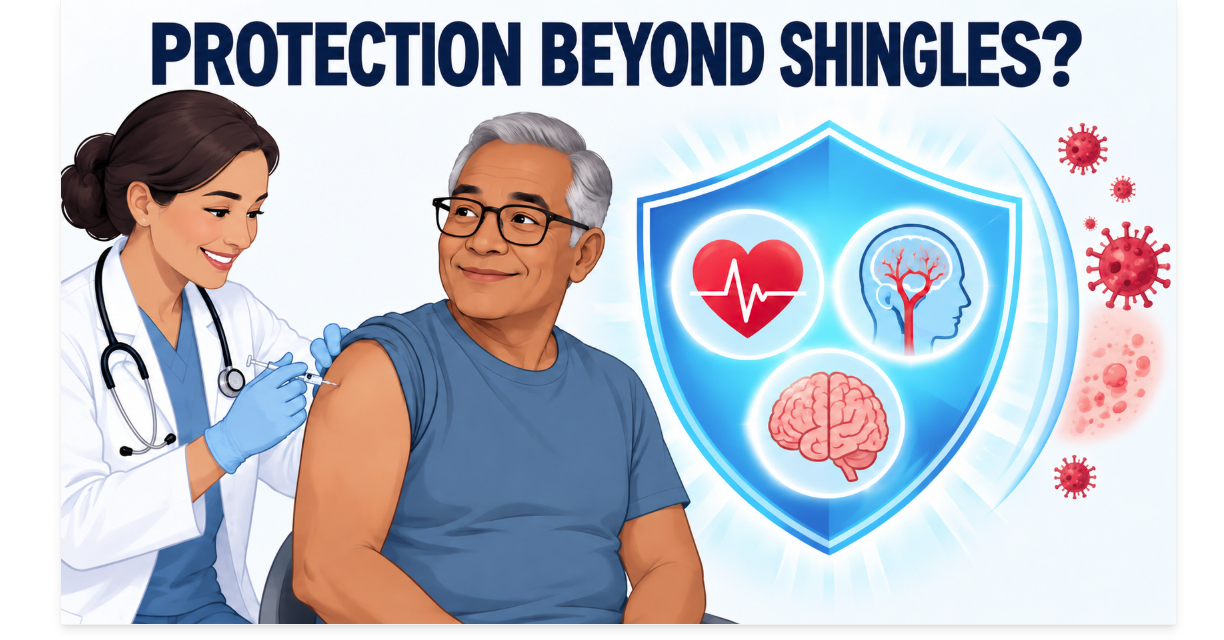
So the next natural question to ask is, does the shingles vaccine reduce the risk of having a heart attack, stroke, or developing dementia?
A recent summary publication in the Canadian Medical Association Journal gives us a concise overview of this important topic.
The first point, as blogged previously, is that getting the shingles vaccine is 85-90% effective to prevent shingles over 11 years (and still counting – people from the trials are still being followed for up to 15 years). The vaccine is given as two injections, 2-6 months apart.
The shingles vaccine is recommended for people age 50+, or people age 18+ who are or will be at increased risk of shingles due to immunodeficiency or immunosuppression caused by a disease or by therapy. As one in three people who has a shingles episode is younger than 50 years old (based on pre chickenpox vaccine population data), it is increasingly recognized that people who are age 18-49 at increased risk of shingles (such as those with diabetes, chronic kidney disease, chronic lung disease, or other chronic health conditions) may be considered for vaccination. (note that although the risk of shingles is lower in people who had the chickenpox vaccine as a kid, they are still at risk of shingles and should also be considered for vaccination)
The publication points to data suggesting that having the shingles vaccine reduced the risk of hospitalization with a heart attack by 28%, and a 43% reduction in the risk of stroke. Large population studies have observed that people age 65+ who received the shingles vaccine had a 51% lower risk of dementia as well. As these are population studies and not formal cardiovascular outcome trial data, we have to take the data with a grain of salt. But it makes sense, given that having a shingles episode is associated with increased risk of heart attack and stroke.
How does shingles increase risk of heart attack, stroke and dementia? This is likely multifactorial, but resides in the body’s inflammatory response to the infection, as well as viral and immune mediated effects.
BOTTOM LINE: Having a shingles episode increases the risk of having a heart attack or stroke. The shingles vaccine is highly efficacious to reduce the risk of having shingles, and existing population studies suggest that the shingles vaccine may reduce the risk of heart attack, stroke, and developing dementia.
Disclaimer: I receive honoraria as a continuing medical education speaker and consultant from the makers of Shingrix (Glaxo Smith Kline). GSK did not fund, review, influence, or otherwise support the development of this blog post. The views expressed are solely those of me, Dr. Sue Pedersen.
Share this blog post using your favorite social media link below!
Check me out on X / Twitter! @drsuepedersen
www.drsue.ca © 2026