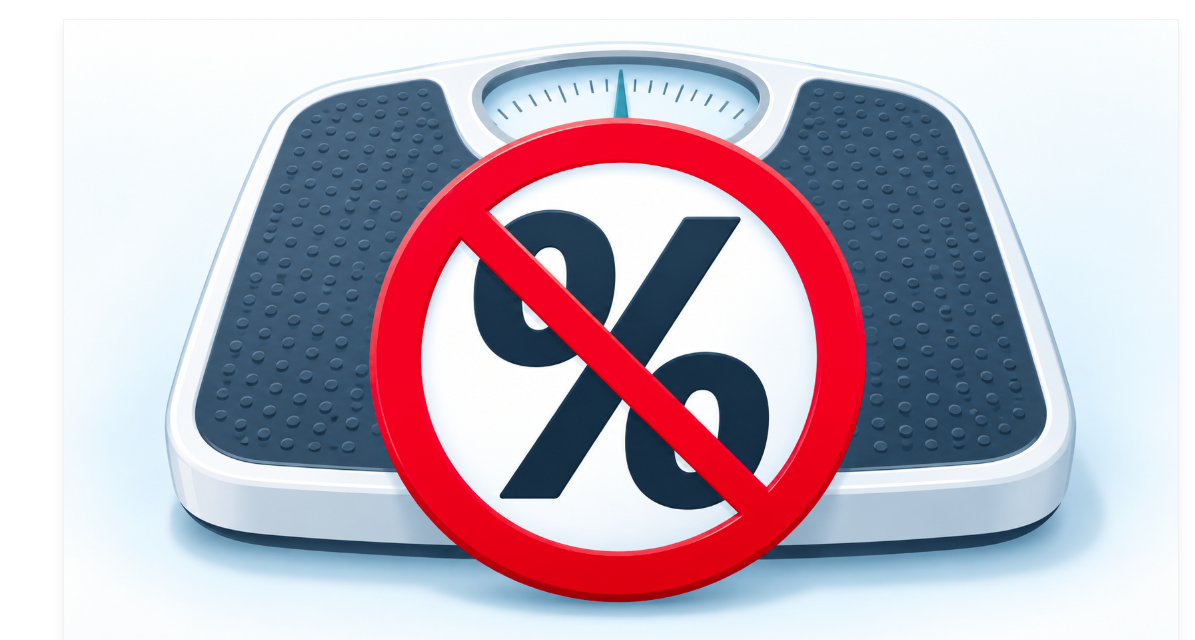
The target metric long required by regulatory agencies (American FDA, Health Canada, European Medicines Agency etc) for weight management medication is percent weight loss. Society and investors in general are also seemingly obsessed with which medications can give THE BIGGEST! THE FASTEST! weight loss. In the old days where we might get 5% weight loss with lifestyle change or an older medicine, fair enough, this modest weight loss was a reasonable surrogate marker of health improvement.
So why is percent weight loss now an unacceptable metric to measure efficacy of a weight loss medicine?
A recent Endocrine Society scientific statement tackles this topic. Put simply, it’s because SO MUCH has changed with the advent of more highly effective medications.
First, the average percentage change in weight in a clinical trial totally ignores the huge variation in weight loss response from one person to the next.
Second, people starting at a lower BMI will reach a healthy BMI with lower percent weight loss (ie they don’t need as high of a % weight loss as someone starting at a higher BMI). People starting at a lower BMI (say 25-30) are at high risk of excessive weight loss if the goal is to achieve the ‘average’ weight loss. In clinical trials and in real life practice, we often need to reduce medication, or not ‘push’ to the highest dose, especially for people starting at a lower BMI, to avoid having them lose too much weight.
SO what can we measure instead of, or in addition to, percent weight loss?
The percentage of people reaching a healthy BMI (eg <25, or <27, or lower to adapt for Asian populations) is much more valuable than looking simply at percent weight loss. Example: let’s say a person with BMI of 28 loses 13% weight, this puts their new BMI at 24.3. This 13% weight loss looks ‘low’, but is actually likely very appropriate for that patient, as it puts them squarely in the ‘healthy’ BMI range (noting that a BMI of 24.3 may be too low for some, and for others, further weight loss from a BMI of 24.3 may be appropriate. But you get my point.) Putting more emphasis on waist based measures, as a marker of the metabolically unhealthy central (visceral) fat is important (though this measure is also subject to its own limitations). Body composition changes would be awesome to include routinely, though this comes with challenges: what technique should be used, what is the cost (DEXA and bioimpedance are inaccurate; MRI is much more accurate but is expensive and not available for routine clinical use). Also remember that body composition changes across the lifespan and differs by gender, ethicity and even menopausal status, and what is considered ‘healthy’ for these diverse subgroups remains to be clearly defined. And not only do we need to think about changes in fat and muscle, but bone density is important too. The position statement contains other suggested metrics as well – check out the full document for more.
And looking beyond measures of body size/composition, remember the most important thing: the focus of weight management should be on the health gains. The benefits of medicine to health conditions like pre/diabetes, heart disease, liver disease, arthritis, sleep apnea, and many other health issues should be the dominant measures of ‘success’ or ‘efficacy’. Also, some benefits to weight management medications are independent of weight loss, so having a myopic focus on weight changes only misses this point completely.
BOTTOM LINE: While the definition of success with weight management medication should be focused on health gains rather than weight loss, weight metrics are likely here to stay as a measure of efficacy of weight management medication. A shift away from percent weight loss to metrics that better characterize benefit amongst people with highly variable starting weight/BMI and highly variable responses to medication, and quality of weight loss, are top priorities!
The Endocrine Society statement takes on many other key topics in obesity science and research – stay tuned to my blog for more!
Share this blog post using your favorite social media link below!
Follow me on X/twitter! @drsuepedersen
www.drsue.ca © 2026